
Aesthetic treatments
Start from the concern rather than the device. What you want changed determines which treatment is worth discussing, how many sessions it realistically takes, and whether it is worth doing at all. These are medical treatments, planned by a clinician for the best results.
Choose your side


The honest version, before the detail
Everything below expands on these points, with sources.
- 01Start from the concern you want changed, not from the device. That determines what is worth discussing at all.
- 02Most treatments here are a series rather than a single session, and results build over weeks to months.
- 03The best results often come from combining treatments in a planned course, rather than a single procedure.
- 04We name the exact device or product proposed and give you the manufacturer's own patient information, so you can read the cleared indications yourself.
- 05Dermal filler carries rare but serious risks including vascular occlusion, tissue death, vision changes and stroke. The urgent warning signs are on this page.
- 06Results are not permanent. Maintenance is part of the decision and part of the cost.
What would you change
Fine lines and wrinkles
You usually notice a change within a few days, and see the full effect about two weeks in. Re-treatment is typically every three to four months.
Volume and skin laxity loss
Longevity varies by product and area, generally in the range of eight to eighteen months. Read the risk section below before booking.
Texture and skin laxity
Usually a series of three or more sessions with results building over weeks to months.
Pigment and texture
Candidacy depends strongly on skin type and recent sun exposure. Skin preparation is often required first.
Overall skin quality
Lower intensity, usually little downtime, generally recommended as a series.
Body shape and tone
A separate decision from weight loss, and a different goal. Covered on its own page.
Five things skin needs, in one plan
Asking one treatment to fix everything is how people end up disappointed. Skin has several problems at once, so we treat it from several angles.
Brighten is for brown spots, sun damage, uneven pigment and dullness. Clear is for redness, blotchiness and uneven tone. Smooth is for rough texture, large pores and surface irregularities. Rebuild is for fine lines, collagen loss, crepey texture and early laxity. Protect supports recovery, deals with ongoing environmental damage and helps hold the correction you have paid for.
The Chrysalis series works on the surface and within the skin. Then we pair it with the laser that matches what your skin actually needs, whether that is redness, stubborn pigment, pores, fine lines, texture, laxity or deeper sun damage.
The goal is not to change the way you look. It is skin that looks brighter, smoother, clearer, firmer and healthier.
The part that happens between visits
Your programme includes the home care to go with it, because what you use between treatments decides how much of the result you keep.
Ourself Brightening targets stubborn discoloration, a regenerative serum supports recovery and skin quality, and NEOVA DNA Repair is for skin stressed by years of sun and environment. When we use a stronger laser, we send you home with the matching NEOVA recovery system.
You will not leave after a laser wondering what to put on your face. Treatment, recovery and home care are planned together.
Pigment, before and after
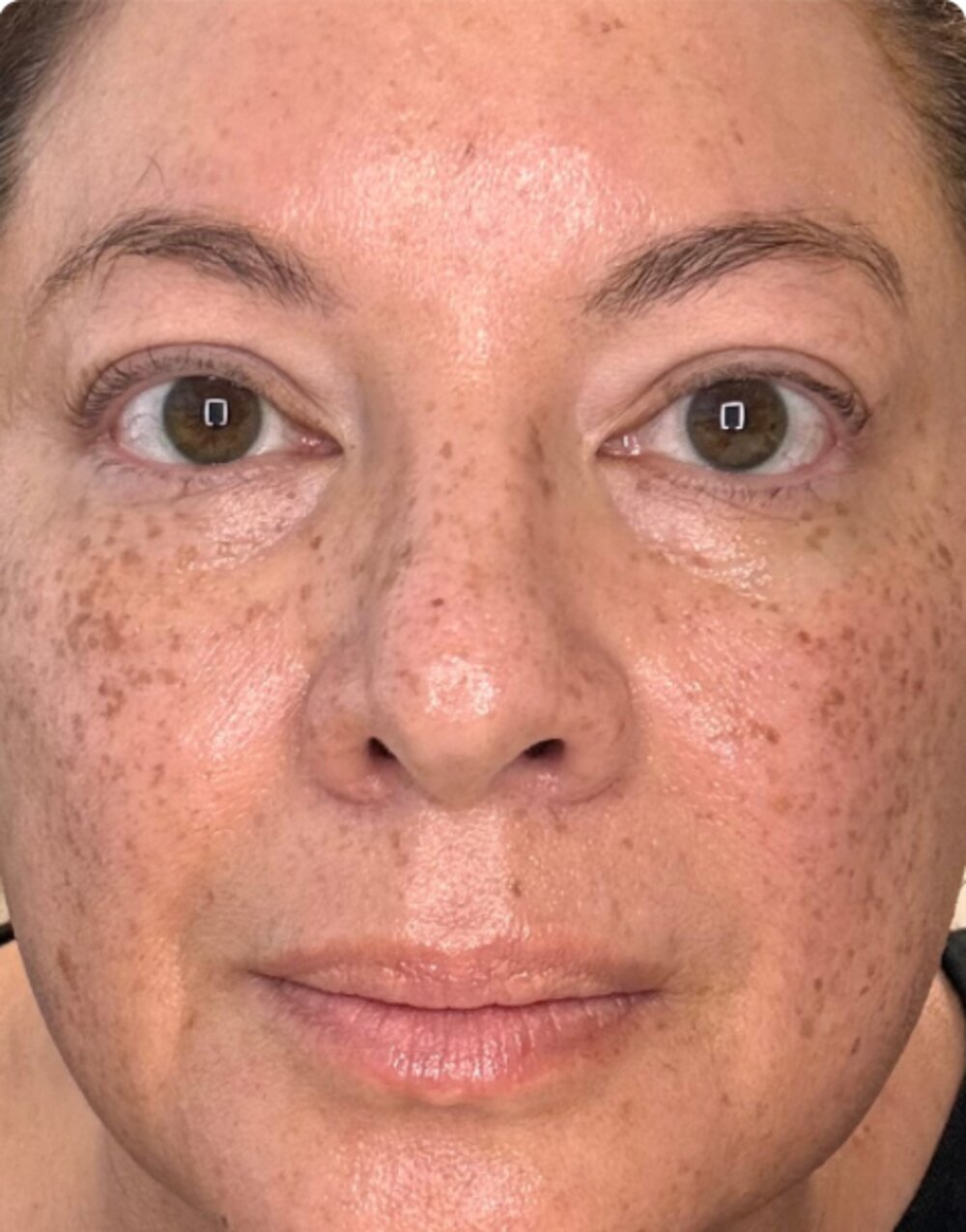
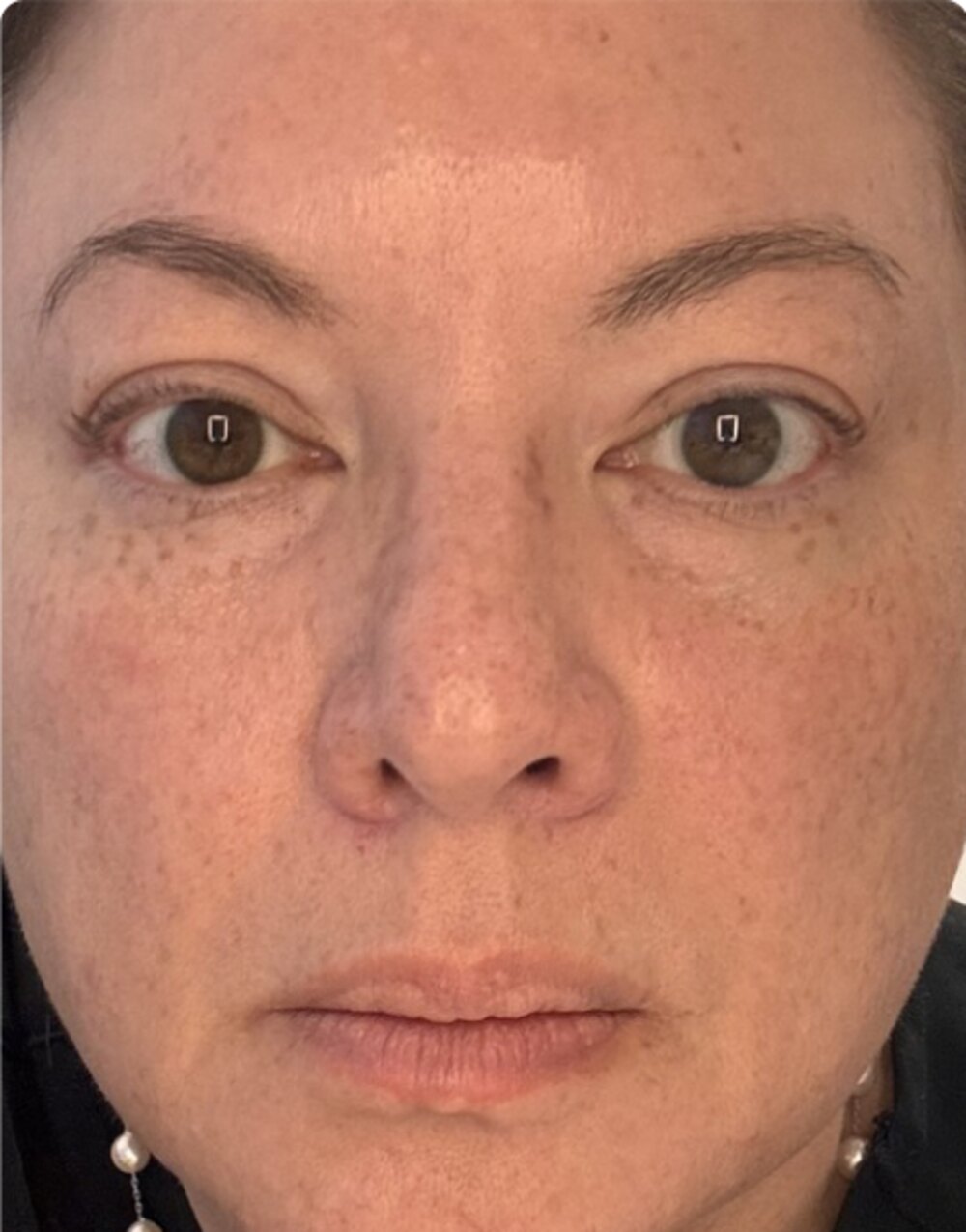
One patient of this practice, photographed in the office and published with her written consent. It shows what happened for her after a course of treatment for pigment. Individual results vary, and a result like this is not guaranteed.
Named, so you can look them up
Treatments in this practice are delivered using Secret PRO, XEO+, truBody including truSculpt and truFlex, AquaFirme, DERIVE and NOUVADerm systems, alongside injectable products.
At consultation we will name the exact device or product proposed for you and give you the manufacturer's patient information, so you can read the cleared indications and the risks from the source rather than from a clinic page.
After dermal filler, know these signs
The FDA documents rare but serious risks with dermal fillers, including unintentional injection into a blood vessel, which can cause tissue death, vision changes and stroke.
Contact the clinic immediately, and seek emergency care if you cannot reach us, if after filler you experience: severe or increasing pain out of proportion to the procedure, skin that turns white, mottled, dusky or blue, any change in vision, or drooping and weakness on one side.
These events are uncommon. They are listed here because the time to learn them is before treatment, not after.
Benefits, risks, alternatives and candidacy
This appears before the booking button on purpose. You should be able to decide with the risks in front of you.
What it may do
- Injectable and energy based treatments can soften lines, restore contour, and improve skin texture and tone.
- Outcomes differ by individual, by product and by area treated. Most treatments here are recommended as a series rather than a single session.
- The aim in this practice is a refreshed, natural result rather than a dramatic change.
Risks and side effects
- Bruising, swelling, redness and short lived discomfort are common and usually settle within hours to a few days.
- Dermal filler carries rare but serious risks including vascular occlusion, tissue death, vision changes and stroke. See the urgent signs above.
- Wrinkle relaxing injectables can rarely cause temporary asymmetry, drooping of the eyelid or brow, and headache.
- Energy based treatments carry risks of burns, blistering, and changes in pigment, which are higher in some skin types and after recent sun exposure.
- Results are not permanent. Maintenance is part of the decision and part of the cost.
Alternatives, including doing nothing
- Prescription or medical grade topical skincare and a structured sun protection routine, which affects several of these concerns.
- A less intensive treatment, or fewer sessions than initially proposed.
- Addressing sleep, sun exposure and smoking, which have a measurable effect on skin.
- Surgical referral where a surgical result is what you actually want.
- Choosing not to treat.
Who may not be a candidate
- Pregnancy and breastfeeding, active skin infection in the area, certain autoimmune and neuromuscular conditions, some medications, recent sun exposure or tanning, a history of keloid scarring, and some implanted devices are among the situations that change or exclude a given treatment. Most aesthetic treatments here are for patients aged twenty one and over.
Answered before you ask
How many sessions will I need?
How much downtime?
What is your aesthetic approach?
Is there an age requirement?
Where this information comes from
Primary sources only: regulator publications, specialty society patient guidance and manufacturer information. Not marketing pages.
- 01U.S. Food and Drug Administration, Dermal Fillers (Soft Tissue Fillers)
- 02Federal Trade Commission, Health Products Compliance Guidance
Schedule an aesthetics consultation
A consultation covers your concern, candidacy, realistic outcomes, downtime, risks and cost before anything is booked.